.svg)
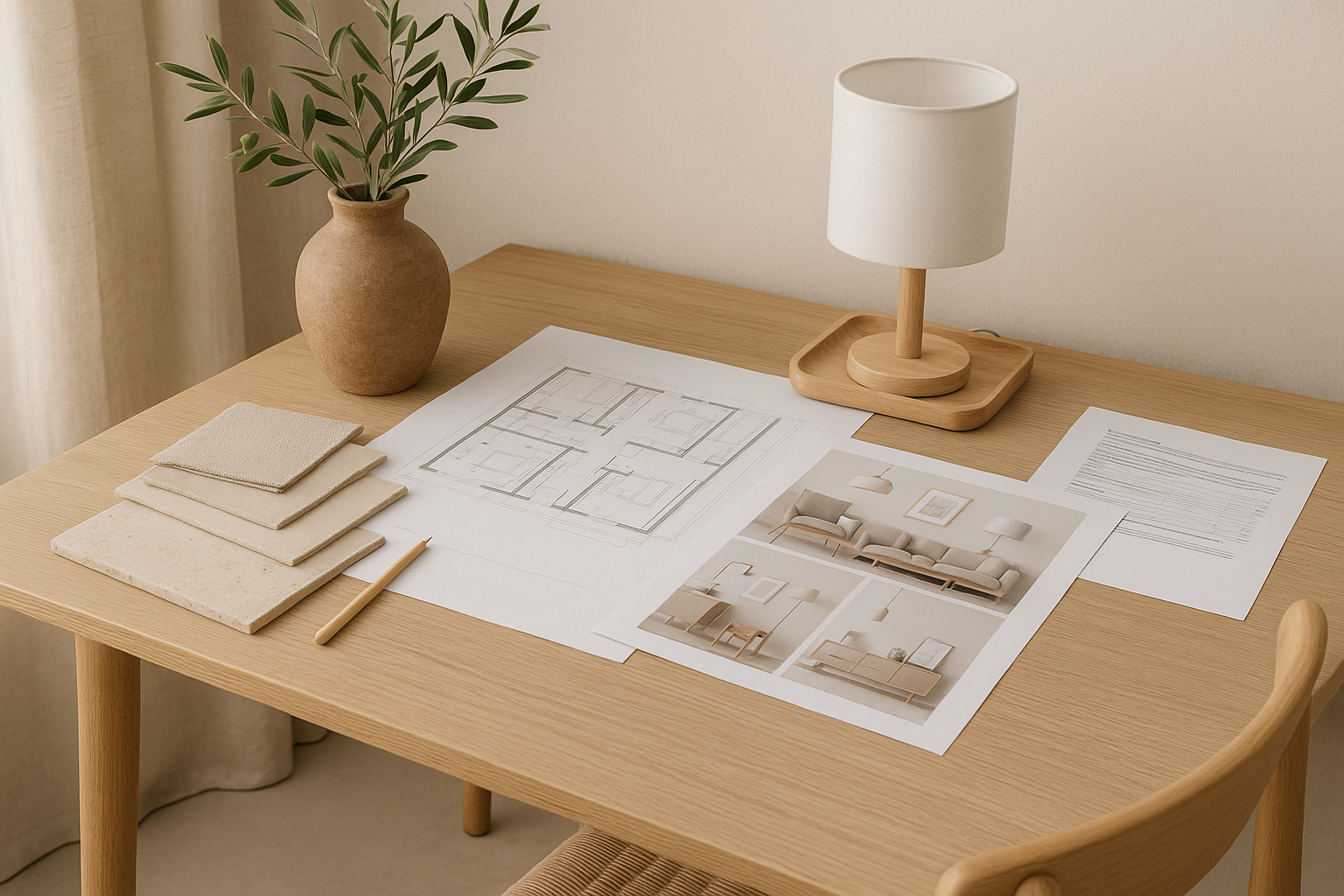
Do interior designers in Cyprus handle permits or construction plans? Interior designers in Cyprus do not issue permits or produce official construction plans directly - Cyprus law requires these documents to be signed by a licensed civil engineer or architect. However, experienced interior design studios coordinate the entire process, working with trusted engineering partners to deliver a seamless experience where you deal with one point of contact.
For international property investors managing renovations from abroad, this integrated approach eliminates the complexity of coordinating multiple professionals across different time zones.
What renovation work requires permits in Cyprus?
Not every interior design project in Cyprus needs formal approval. Cosmetic updates - painting, flooring, new kitchen cabinets within the existing layout - typically proceed without permits.
However, certain modifications require a civil engineer or architect's sign-off:
Structural changes: Removing or adding walls, altering window openings, or modifying load-bearing elements requires engineering assessment.
Major electrical work: Full rewiring or panel upgrades beyond simple fixture changes often need certified approval.
Plumbing relocations: Moving bathrooms or kitchens may require updated technical drawings.
External modifications: Any work affecting building's facade or common areas in apartment blocks involves official approvals.
For a typical 2-bedroom apartment renovation in Limassol, Paphos, or Larnaca, most aesthetic work proceeds smoothly. But opening up a wall between the kitchen and living area, or adding an ensuite bathroom, moves into permit territory. If you're unsure whether your project requires permits, we can assess this during a free consultation.
How interior designers coordinate permits and construction plans
At Karano Interiors, we've built relationships with licensed civil engineers and architects across Cyprus who understand our standards and workflow. When your project requires their expertise, we bring them in during the design phase - not as an after thought. This is similar to how we manage subcontractors and deliveries for clients who aren't in Cyprus full-time.
The practical benefit: one point of contact. You brief us on your vision. We assess what's achievable, identify what requires official approval, and coordinate with the appropriate licensed professionals. The engineer produces the required documentation while we manage timelines and keep everything moving together.
This is part of our comprehensive scope of work - handling everything from initial drawings to final furniture placement, with permit coordination integrated seamlessly.
Why permit coordination matters for overseas property investors
If you're preparing a Cyprus apartment for rental income or future resale, proper documentation protects your investment:
Resale protection: Buyers' solicitors flag discrepancies between official plans and actual layouts. Unpermitted structural work can delay or derail sales.
Rental compliance: Properties with undocumented modifications may face issues with insurance coverage or property management companies.
Peace of mind: When you're managing from London,Dubai, or Tel Aviv, knowing that all approvals are handled correctly eliminates future complications.
The time invested in proper approvals is minimal compared to sorting out unpermitted work later. This is one reason why hiring an interior designer rather than DIY often proves more cost-effective for overseas investors - the coordination complexity alone justifies professional management.
What the permit coordination process looks like
A typical project requiring permits flows through these stages:
1. Assessment: We discuss your goals and evaluate the property to determine what approvals are needed.
2. Design development: If structural changes are required, we involve our engineering partners during the concept phase. They develop technical drawings while we create the interior design in parallel.
3. Permit application: The licensed engineer or architect submits the required documentation to the relevant authorities.
4. Construction: Once approvals are in place, renovation work proceeds under our supervision. We coordinate all trades and handle quality control.
5. Completion: You receive a finished space wit hall documentation in order.
Throughout the process, you deal with one team. Engineering fees are quoted transparently as part of the overall cost of hiring an interior designer in Cyprus. There's no need to source your own structural professional or coordinate between parties yourself.
Interior designer vs. architect: who handles what?
Understanding the distinction helps clarify why both roles matter. We've covered this in detail in our article on the difference between an architect and interior designer, but here's the quick summary:
Architects and civil engineers: Licensed to produce official construction drawings, structural calculations, and permit applications. Required by law for structural modifications.
Interior designers: Focus on spatial planning, materials, finishes, furniture, lighting, and the overall aesthetic experience. Coordinate the full project including bringing in licensed professionals when needed.
For most residential renovations, an interior designer managing the project with engineering support delivers the best outcome - you get both the technical compliance and the design expertise that transforms a property into something worth more than the sum of its parts.
The bottom line on permits and interior design in Cyprus
Interior designers in Cyprus don't issue building permits or produce official construction plans - the law reserves that for licensed engineers and architects. But an experienced interior design studio manages the entire process, bringing in the right specialists at the right time and taking full responsibility for coordination and timelines.
For overseas property investors, this integrated approach turns what could be a bureaucratic maze into a straightforward, professionally managed project. Whether you're joining at the final phase after construction or starting from a shell apartment, we ensure all necessary approvals are handled correctly from the start.
📩 Book a free consultation to discuss your project and find out exactly what approvals your renovation might need.
Frequently asked questions
Can an interior designer apply for building permits inCyprus?
No, building permits in Cyprus must be issued through applications prepared by licensed civil engineers or architects. However, interior designers coordinate with these professionals and manage the overall project, so you don't need to handle this separately.
Do I need a permit to renovate an apartment in Cyprus?
It depends on the scope. Cosmetic changes like painting, flooring, and cabinet updates typically don't require permits. Structural modifications, major electrical work, or plumbing relocations usually do. An interior designer can assess your specific project during an initial consultation.
How long does the permit process take in Cyprus?
Permit timelines vary based on the municipality and complexity of work. Simple structural modifications might take 4-8 weeks for approval. More complex projects can take longer. Working with professionals who have established relationships with local authorities can help streamline the process.
What happens if I renovate without proper permits?
Unpermitted structural work can create significant problems when selling or insuring the property. Buyers' solicitors routinely check that the actual layout matches official plans. Resolving discrepancies after the fact is typically more expensive and time-consuming than obtaining proper permits initially.